
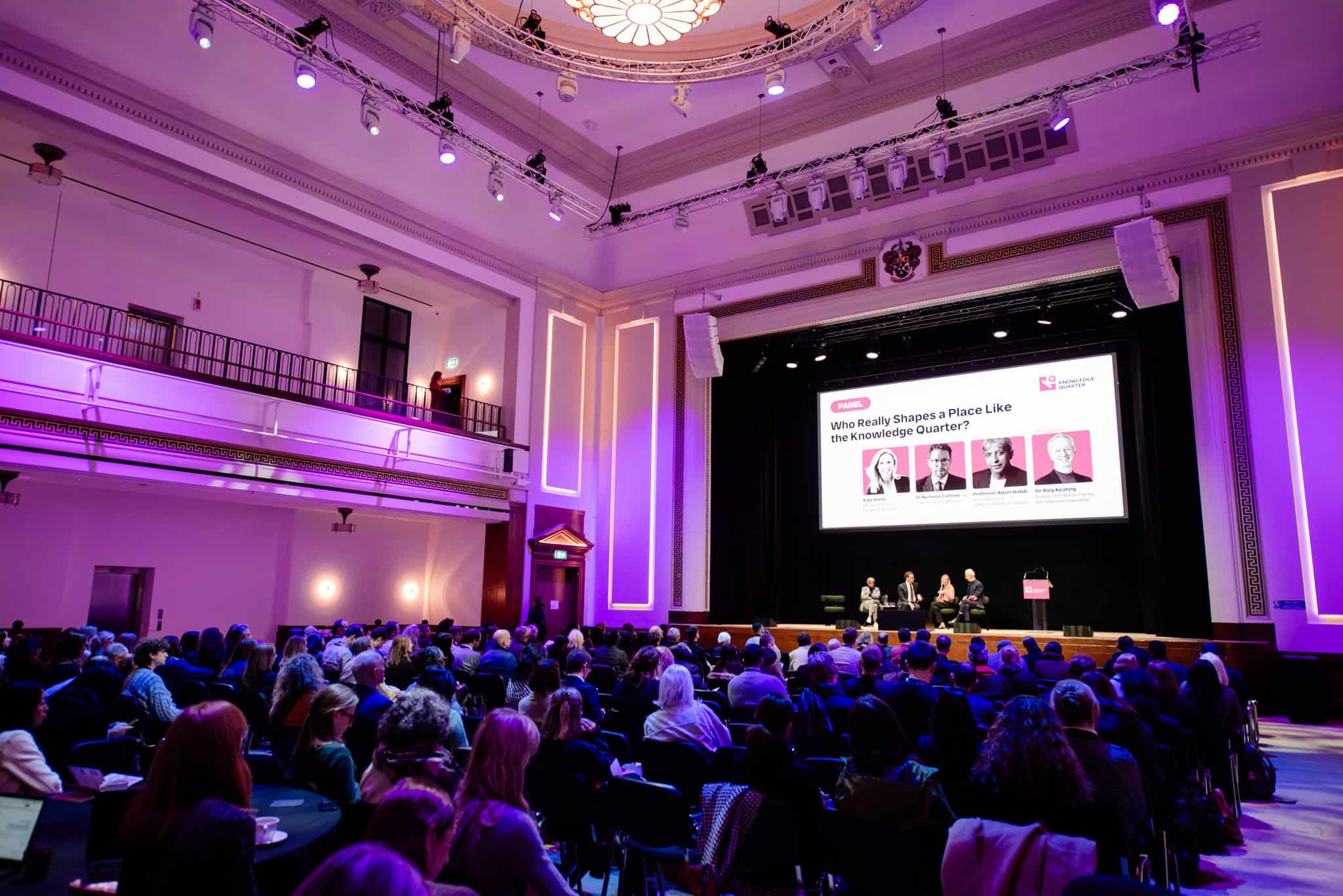
Most conference planning guides are written by companies that sell event software. They are thorough on registration tools and light on what actually happens in the room. This one is written from the other side of the table, by the events team at a venue that hosts conferences, and reads the briefs that arrive before every one of them.
It covers the decisions worth making before anything else, a timeline that works back from the day, what a conference asks of a venue that a party never does, and a checklist to work from. It is written for London, but most of it holds wherever your conference is.
Start with three decisions, not the agenda
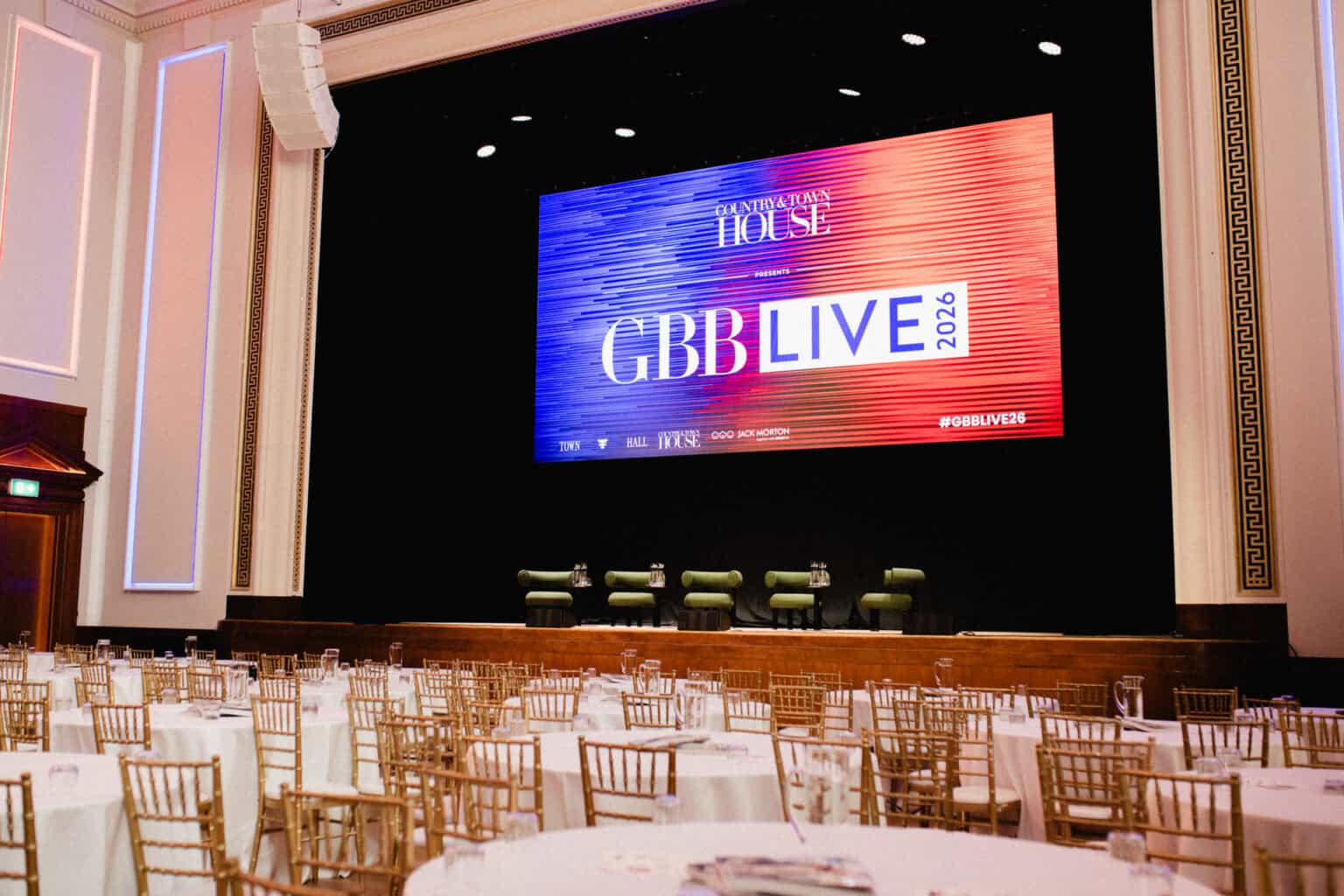
The agenda feels like the natural starting point, and it is the reason so many conferences end up in the wrong room. Three decisions come first, because each one rules venues in or out.
Who it is for, and what they should leave with. An industry conference selling tickets, an internal conference for your own staff and a members’ AGM look similar on paper and behave very differently. Write one sentence on what a delegate should know, feel or do by the end of the day. Every later choice, from the length of the sessions to the length of the lunch, is easier with that sentence in front of you.
How many delegates, honestly. Not the number on the invitation list, but the number in the room after lunch. Attendance drops through the day, and the gap between registrations and arrivals is often wider for free events than paid ones. Plan the plenary for your realistic peak and the breakouts for how people will actually split. If you are unsure what a given number needs, we have written separately about how much event space you need for 50, 100 or 200 guests.
Plenary only, or plenary plus breakouts. This is the decision that rules out most venues. A single room for a single stream is easy to find. A main room plus several breakout spaces in the same building, close enough that a changeover takes minutes rather than a walk across a city block, is much harder, and it is what most conferences of any size eventually need.
Build the timeline backwards
Fix the date, then work back from it. These are the points where a conference most often slips, and roughly how far ahead each one needs to be settled.
- Nine to twelve months out: venue and date confirmed, budget agreed, and the conference’s purpose written down.
- Six months out: keynote speakers approached, the programme shape set (how many sessions, how many streams), and sponsorship packages out if you are selling them.
- Three months out: registration open, the production brief with the venue, catering numbers estimated, and accommodation blocks held for anyone travelling.
- Six weeks out: the full run of show written, speaker slides and requirements requested, and accessibility and dietary needs gathered from registrations.
- The week before: final numbers to the venue, a site walk with your team, signage printed, and a rehearsal booked for anyone presenting from the main stage.
The checklist at the end of this guide follows the same stages, so it can be used as a working document from the day the date is fixed.
What a conference asks of a venue that a party doesn’t
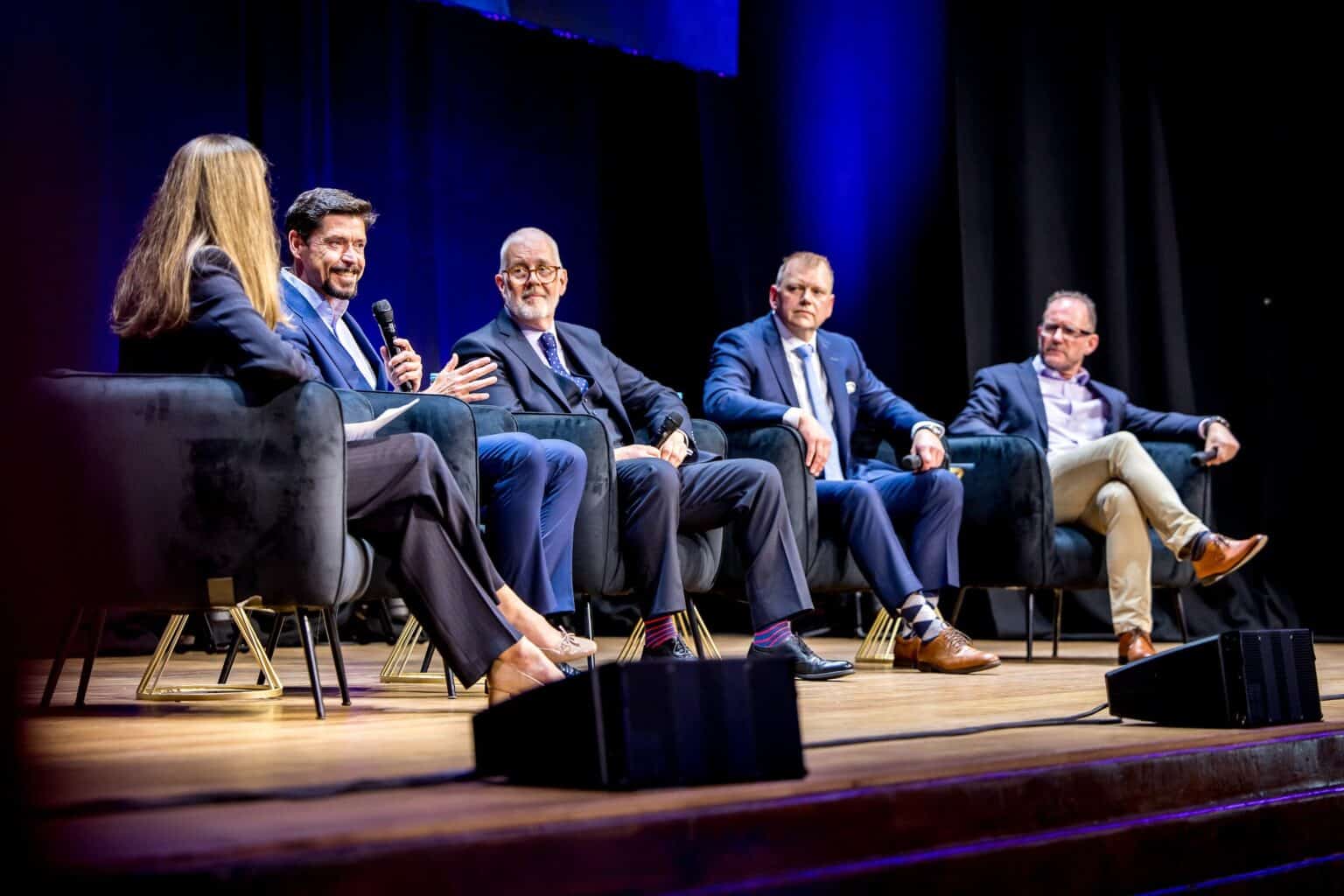
A good party venue is not automatically a good conference venue. A conference runs to a timetable, depends on people being able to see and hear for hours at a time, and moves several hundred people between rooms on the hour. These are the things worth checking on a site visit.
Sightlines and a proper stage. Stand at the back of the plenary room and look at the stage. Columns, low ceilings and a stage that is too low all show up here, and none of them can be fixed on the day. Height matters too, because screens need to sit above the heads in front.
Breakouts that are genuinely close. Fifteen minutes between sessions is fifteen minutes only if the rooms are a short walk apart. Ask how the breakout spaces connect to the main room, and walk the route yourself at the pace of a crowd.
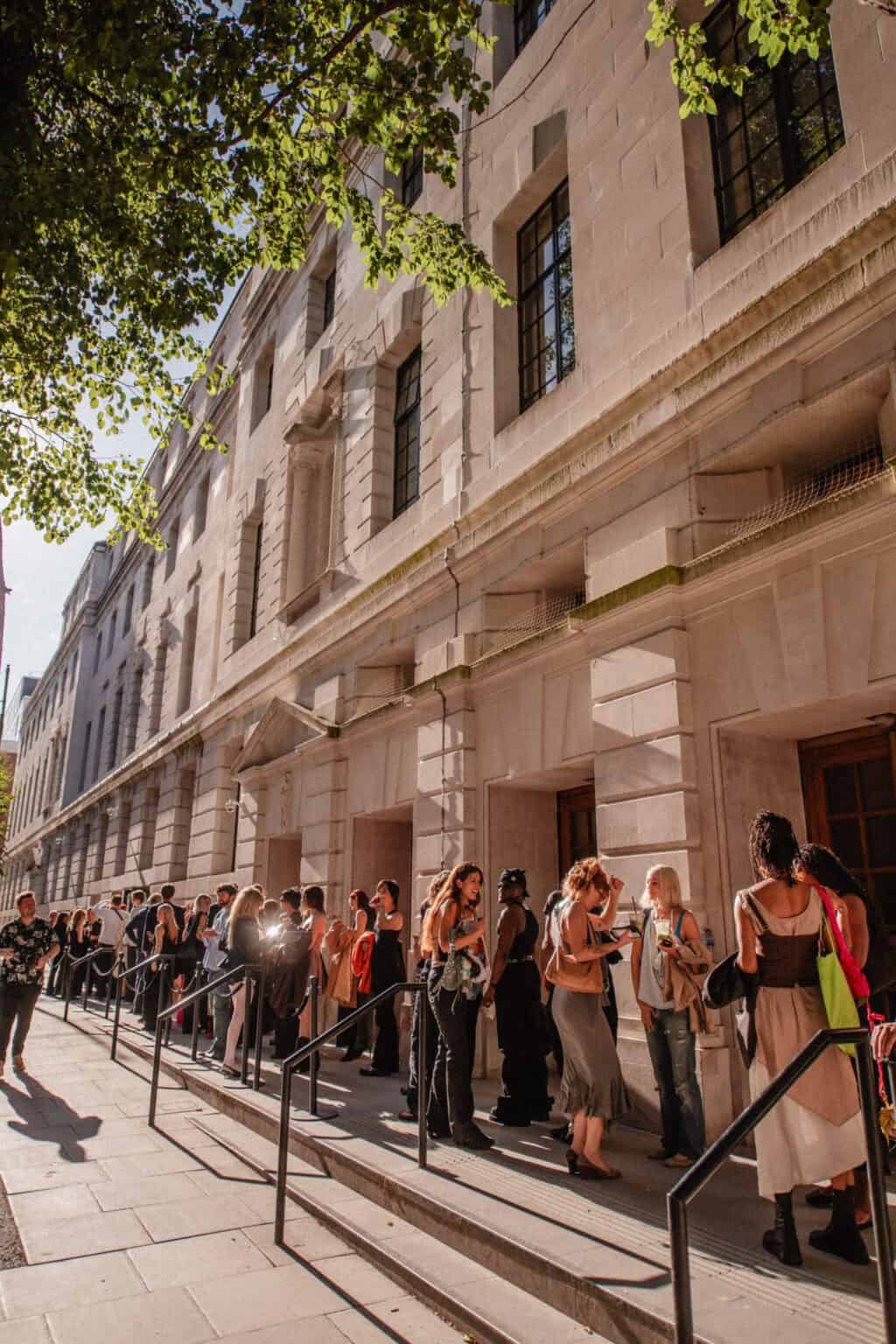
Registration and arrival. Picture three hundred people arriving between half past eight and nine. Where do they queue, where do coats go, and where is coffee while they wait? An entrance that works for a party, when guests arrive over an hour, can jam badly for a conference, when everyone arrives in the same twenty minutes.
Somewhere for speakers. Keynote speakers need a green room to prepare, check slides and wait away from the audience. It is a small thing to ask for and a hard thing to improvise.
Production that belongs to the building. Hired-in AV can work, but every piece brought in is more set-up time and another supplier to coordinate. Ask what is installed, who runs it on the day, and whether the same team handles every room.
Access and cloakroom, asked about early. Step-free routes, lifts, accessible toilets and staffed cloakrooms vary between venues and even between rooms in the same venue. They are much easier to plan around if you know at the shortlist stage.
Finally, be clear about what the hire fee covers before you compare quotes. Our guide to what is included in a venue hire sets out what is usually included and what is usually charged as an extra. If you would like to see how Town Hall handles all of the above, the detail is on our conference venue page.
Shape the programme around energy

A programme is a sequence of moments with breaks in between, not just a list of sessions. Put your strongest speaker early, while the room is fresh and full. Keep the slot after lunch for something interactive, because attention is at its lowest then and listening is hardest. Make the breaks long enough for people to actually talk, since for many delegates the conversations between sessions are the reason they came.
End on something that sends people out with the sentence you wrote at the start. A closing session that just runs out of time is how most conferences end, and it is the part delegates remember. We have written in more detail about building an agenda around energy for away days, and the same principles apply.
Treat the online audience as a second event
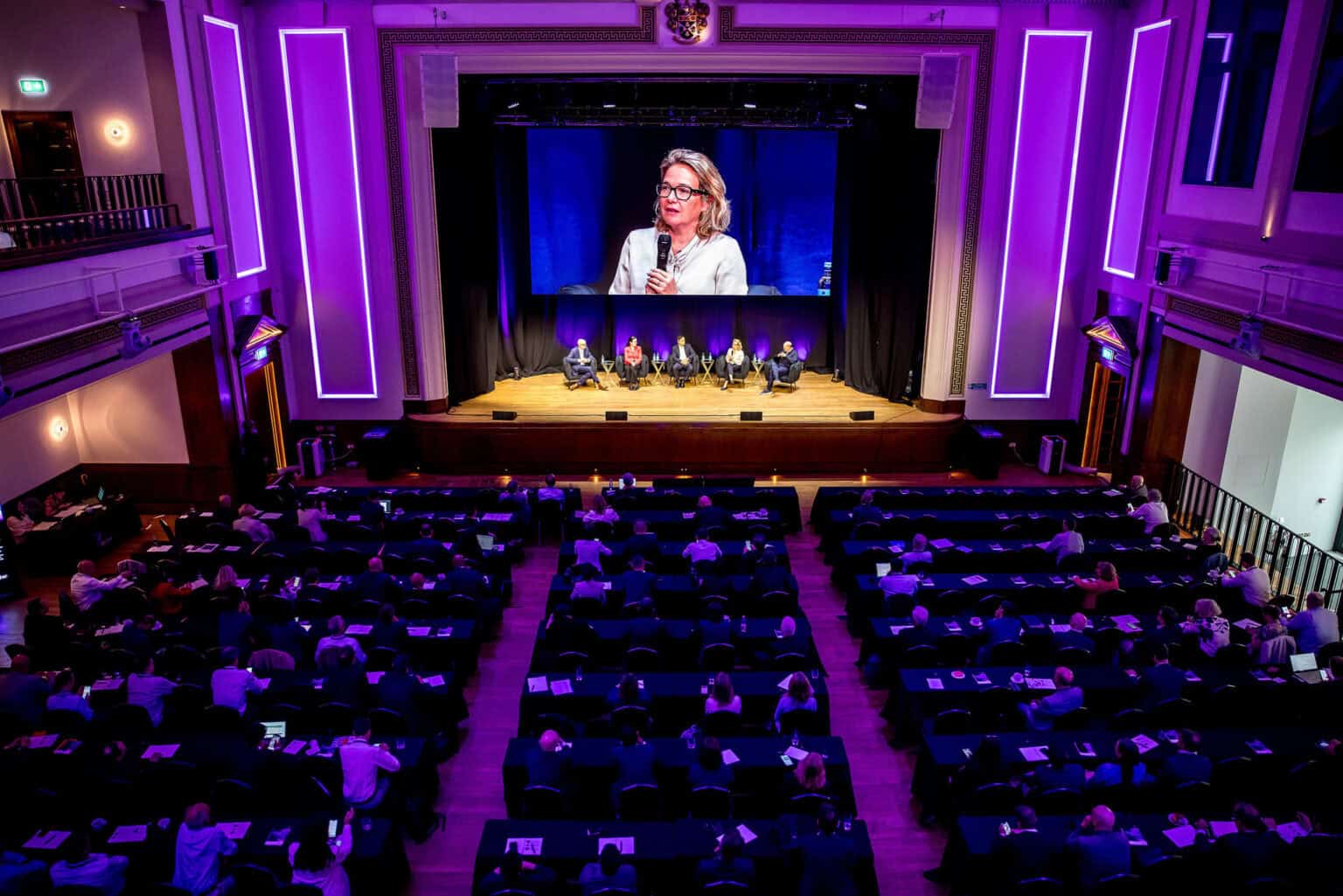
If the conference is streamed, the people watching online are a separate audience with different needs. They cannot see the room, they cannot hear questions from the floor unless a microphone reaches them, and they leave the moment the stream shows an empty stage between sessions.
Plan them their own experience: a host who speaks to the camera between sessions, a running order that tells them what is coming, and a camera plan that shows the speaker and the slides rather than a wide shot of the room. Agree the audio feed with the production team in advance, because poor sound loses an online audience faster than poor pictures.
At Town Hall, production partner Pixl works in-house, with native 4K and full patching across the building, so a session can be filmed, streamed or recorded without bringing in a separate crew.
Catering at delegate scale
Conference catering is a timing problem as much as a menu problem. Breakfast needs to be ready as the first delegates arrive. Mid-morning and afternoon breaks need enough service points that the queue does not eat the break. Lunch has to serve everyone inside the slot in the programme, which usually means a standing or buffet format for large numbers rather than a plated meal.
Collect dietary requirements at registration rather than discovering them at the counter, and give the caterer the final numbers when the venue asks for them. At Town Hall, catering is by Rhubarb, whose kitchens treat every dietary requirement as a menu in its own right rather than an afterthought.
Getting delegates there
For a conference, location is a practical question first. Delegates travel in on the morning of the event, often from outside London, and a venue a long walk from a major station costs you the first half hour of the programme.
King’s Cross is one of the easiest places in the city to reach. Town Hall is five minutes’ walk from King’s Cross and St Pancras, ten minutes from Euston, and a short walk from the Eurostar for international delegates. There are hotels within walking distance for multi-day conferences, and the venue’s accessible entrance is on Bidborough Street, with passenger lifts between floors.
The conference planning checklist
Nine to twelve months out
- Write one sentence on who the conference is for and what delegates should leave with.
- Agree the budget and how it will be signed off.
- Settle a realistic peak headcount and whether you need breakout rooms.
- Shortlist venues, visit them, and confirm the venue and date.
Six months out
- Approach keynote speakers and confirm their fees and travel.
- Set the programme shape: number of sessions, streams and breaks.
- Decide whether the conference will be streamed or recorded.
- Send out sponsorship and exhibitor packages if you are selling them.
Three months out
- Open registration, with questions on dietary and accessibility needs built in.
- Send the production brief to the venue: stage, screens, microphones, streaming.
- Give the caterer estimated numbers and agree the timings for breaks and lunch.
- Hold hotel rooms for speakers and travelling delegates.
Six weeks out
- Write the full run of show, minute by minute, for the day.
- Collect speaker slides, biographies and technical requirements.
- Share accessibility and dietary needs with the venue and caterer.
- Brief your own team on who is responsible for what on the day.
The week before
- Confirm final numbers with the venue and caterer.
- Walk the venue with your team, including the registration area and breakout routes.
- Print signage and delegate badges.
- Rehearse anyone presenting from the main stage, with slides and microphones.
Afterwards
- Send delegates the recordings and slides within a week, while the day is still fresh.
- Survey delegates and speakers, and note what to change for next time.
Frequently asked questions
How far ahead should you book a conference venue in London?
For a conference of a few hundred delegates, nine to twelve months is the comfortable window, and longer if your dates are fixed by an industry calendar. Spring and autumn are the busiest periods for conferences in London, so a date in those seasons goes first. Smaller conferences can often be booked three to six months out, but the choice of room narrows as the date gets closer.
Which room layout is best for a conference?
Theatre style is usually right for the plenary, because it seats the most people facing the stage. Cabaret style, with groups at round tables, suits working sessions where delegates need to write and talk to each other. As an example, Town Hall’s Vision Hall seats 700 theatre style or 280 cabaret style, so the choice of layout changes your capacity a great deal.
How many breakout rooms does a conference need?
Work it out from the programme, not the headcount. Count the largest number of sessions you want running at the same time, and that is the number of rooms you need. Then check each room holds the share of delegates you expect in it, and that the walk from the plenary is short enough to keep changeovers to the time you have allowed.
Can a conference be streamed live from the venue?
Yes, if the venue has the production infrastructure for it. Streaming needs cameras, a clean audio feed, a reliable connection and someone running the output, so ask whether that is built into the building or has to be brought in. At Town Hall, production partner Pixl works in-house, with native 4K and full patching across the building.
How long does a conference venue need to set up?
That depends on the staging and production. A plenary with a standard stage, screens and theatre seating is often set the evening before or early on the morning of the event. A custom stage, exhibition stands or a full lighting rig can need a full day in the room, so confirm your access time when you book.
Where to go from here
If you have settled the three decisions at the top of this guide, you are ready to look at rooms. Town Hall hosts conferences in King’s Cross, with Vision Hall for the plenary, Inner Space, The Network and The Terrace for breakouts and receptions, production in-house and catering by Rhubarb. You can see the detail on our conference venue page, or talk to the events team about a specific date.