
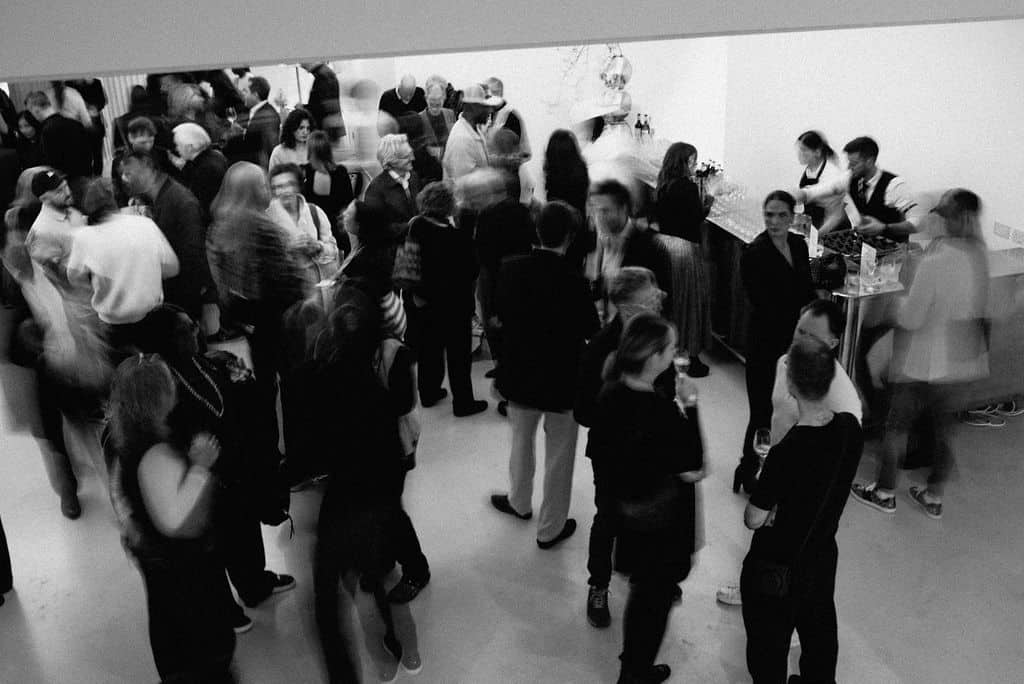
Venue capacity is one of those deceptively simple questions. You have 100 guests, so you need a room that holds 100 people. Except that is not how venues work. A room that comfortably holds 100 for a standing drinks reception will hold far fewer once you add tables, chairs, a stage, and a service route for waiting staff. The honest answer to how much space you need is: it depends entirely on how you plan to use the room. This guide gives you real figures, broken down by layout and guest count, so you can shortlist venues with a sensible frame of reference.
Layout determines your actual capacity
The single biggest variable in venue sizing is not the room dimensions. It is how you arrange the room. Rows of chairs facing a stage (theatre layout) require roughly 0.75 to 1 square metre per person. Add tables with guests seated on one side facing the front (cabaret), and that rises to around 1.5 square metres. Full dining rounds, where everyone sits all around the table, need 1.2 to 1.4 square metres. Standing receptions sit anywhere between 0.5 and 1 square metre depending on how much breathing room you want.
That means the same 150-square-metre space could comfortably hold 150 to 200 people standing, around 150 in theatre layout, 100 to 125 for a seated dinner on rounds, or 80 to 100 in cabaret. Same room. Dramatically different numbers.
Space requirements by layout
These figures represent usable floor area per person, before accounting for infrastructure such as staging, bars, and service areas. They are drawn from the Venues.London layout guide and Expo Hire’s capacity reference, both widely used within the UK events industry.
- Standing reception: 0.5 to 1 sqm per person. A comfortable reception atmosphere sits at the higher end of this range.
- Theatre (chairs only, no tables): 0.75 to 1 sqm per person.
- Banquet (rounds, full seating all around): 1.2 to 1.4 sqm per person.
- Cabaret (rounds, guests on one side only, facing the stage): around 1.5 sqm per person.
- Classroom (tables and chairs, all facing front): 1.4 to 1.7 sqm per person.
As a quick conversion: theatre typically holds 40 to 50 per cent more guests than cabaret in the same room. Standing holds roughly double the guests of any seated layout.
How much space for 50 guests
Fifty guests is a manageable number that most mid-size event rooms and private dining spaces handle well across all formats.
For a standing reception, 40 square metres is workable, though 50 square metres gives everyone proper room to move and talk. Theatre layout needs roughly 40 to 50 square metres. A seated dinner in banquet or rounds format needs around 60 to 70 square metres. Cabaret needs roughly 75 square metres.
These are minimum floor area figures. Once you add a small stage, a bar, or a registration area, the effective guest space shrinks. Add 10 to 15 square metres for each significant infrastructure element when you are sizing up a room.
How much space for 100 guests
This is where layout choices begin to meaningfully restrict your venue shortlist. Theatre layout needs around 80 to 100 square metres. A seated dinner in banquet or rounds format needs 120 to 140 square metres, and cabaret pushes that to around 150 square metres.
If the event includes a speaker, staging, and AV, add another 20 to 30 square metres on top of the guest floor area for the production setup. A 100-person seated dinner in cabaret with a small stage realistically needs 180 to 200 usable square metres. That rules out a significant number of rooms that would appear on paper to hold 100.
How much space for 200 guests
Two hundred guests narrows the London venue options considerably, particularly for seated formats. Theatre layout needs 150 to 200 square metres, which most large event spaces can accommodate. Banquet or rounds need 250 to 280 square metres. Cabaret needs around 300 square metres, before accounting for staging and production.
For a standing reception, 150 to 200 square metres is comfortable. At this guest count, it is worth asking venues not just for their headline capacity figure, but specifically which layouts they regularly run for 200-person events. A venue with strong standing capacity may have limited experience running a 200-cover seated dinner in the same space.
What reduces your usable floor area
The floor area a venue quotes is total floor area, not the area available for guests. All of the following eat into it before you seat a single person:
- Stage and presentation setup: typically 15 to 25 square metres. A raised platform for a panel, plus steps and safety clearance, adds up quickly.
- Bar setup: 10 to 20 square metres including the service zone behind the bar.
- Registration and entry management: 8 to 15 square metres for a 200-person event.
- AV and technical equipment: screens, cameras, and rigging all need clear floor space and protected sightlines.
- Dance floor: for a dinner dance format, a dancefloor removes roughly 15 to 30 per cent of seated capacity from the total.
- Circulation routes: waiting staff need clear paths between the kitchen and every table. A room that technically seats 150 may feel uncomfortably tight at 120 once service routes are factored in.
If you are planning a dry hire event and bringing in your own staging, AV, and bar setup, work through all of this on a scaled floorplan before you commit to a venue. The headline square metreage can be misleading without it.
The practical rule
Take whatever figure you calculate and add a 15 to 20 per cent buffer before you shortlist. Venues often quote their maximum capacity, not their comfortable operating capacity. You want a room that feels right at your guest count, not one that only works if everything is squeezed to its limits. For a fuller picture of what is typically bundled into a hire fee, see our guide to what is included in venue hire.
What this means at Town Hall Spaces
Town Hall Spaces operates three distinct spaces in King’s Cross, each suited to different guest counts and event formats.
Vision Hall covers 800 square metres with a theatre capacity of 700 and standing capacity of 1,100. It handles 200 guests in any format with substantial space remaining for staging and production. Inner Space covers 640 square metres with standing capacity of 700 and theatre capacity of 200, making it well suited to mid-to-large formats where design and atmosphere are as important as raw capacity. The Network, designed by Tom Dixon and covering 540 square metres, seats 150 in theatre style and holds 240 standing, making it the right choice for events of 50 to 100 guests in a more intimate setting.
For events of 200 or more, Vision Hall or a combination of spaces within the building gives you the floor area and the flexibility to run any layout without compromise.
Sources
- Venues.London: Venue Layouts Explained: Theatre, Cabaret and More
- Expo Hire: Event Furniture Layout Guide
- Town Hall Spaces: Spaces and Capacities