
A corporate away day can be one of the most useful things you do with a team all year. It can also be a day that people endure rather than gain anything from.
The difference is almost always in the planning. Not the budget, not the venue, not the activity. The planning. Specifically: knowing what you want the day to achieve before you start making any other decisions.
This guide covers how to plan a corporate away day in London from brief to delivery, including what to think about at each stage and where the common mistakes tend to happen.
Start with the objective, not the format
The most common away day planning mistake is choosing the format before establishing the purpose. Teams decide they want a “fun day out” or a “strategy session” and work backwards from there. The result is usually a day that feels vague, even when the logistics are well executed.
A sharper starting point is a single sentence that completes this prompt: “By the end of this day, we want the team to…”
That might be:
- Aligned on priorities for the next six months
- Clear on a specific decision that has been holding the business back
- More connected as a group after a period of remote or hybrid working
- Energised ahead of a significant product or campaign launch
The answer shapes everything that follows: format, venue, agenda, timings and tone. Without it, you are making decisions without a reference point.
Choose a format that matches the objective
Once the objective is clear, the format becomes much easier to decide. The main formats that work well for corporate away days in London are:
- Strategy and planning sessions. Full-group discussions and working groups focused on direction or decisions. Best run in a venue with breakout capacity and minimal distractions.
- All-hands or company presentations. Leadership updates, department showcases and goal-setting. Needs strong AV and a space that can shift between theatre-style and social formats across the day.
- Creative or skills-based workshops. A facilitated session built around a shared output. Works well when the team needs to think differently or reconnect with the work itself.
- Internal conferences or showcases. Teams present projects or updates to each other. Builds cross-organisational visibility and tends to surface conversations that day-to-day work suppresses.
- Kick-off events. Combines alignment, energy and celebration. Particularly effective at the start of a new year, quarter or major initiative.
Most successful away days blend two of these formats rather than committing entirely to one. A morning of structured working groups followed by an afternoon showcase, for example, gives the day both substance and variety.
Set the date and book early
Corporate away days in London tend to compete for the same windows: Thursdays in September and October, and the run-up to the end of the financial year. If you are planning around those periods, venue availability narrows quickly.
As a general guide:
- For a day involving 20 or more people, start looking at venues at least eight to twelve weeks ahead
- For larger all-hands events or events with external speakers, twelve to sixteen weeks is more realistic
- Christmas and end-of-year events book out the fastest. September is not too early for a December date
Booking early also gives you more flexibility on catering, AV suppliers and any external facilitators you want to bring in. These tend to be booked independently of the venue, and the good ones fill up at similar lead times.
Choose the right venue for your format and numbers
The venue does more than provide a room. It sets the tone of the day and either supports or works against your agenda. A few things to prioritise when shortlisting:
- Layout flexibility. Can the space shift between full-group and breakout configurations without significant setup time? Most away days need at least two different setups across the day.
- AV and connectivity. Reliable projection or screens, quality audio and stable Wi-Fi. Worth checking specifically rather than assuming these are standard.
- Catering options. A dry hire venue lets you bring your own caterer and structure food around your agenda. A venue with an in-house catering tie-in may be simpler but less flexible.
- Transport access. For a mixed London team, somewhere near a major interchange saves you an hour of lateness at the start. King’s Cross, Euston and London Bridge all work well as anchor points.
- A sense of separation from the usual. A space that feels distinct from the office signals that the day is worth engaging with differently. This matters more than most people expect.
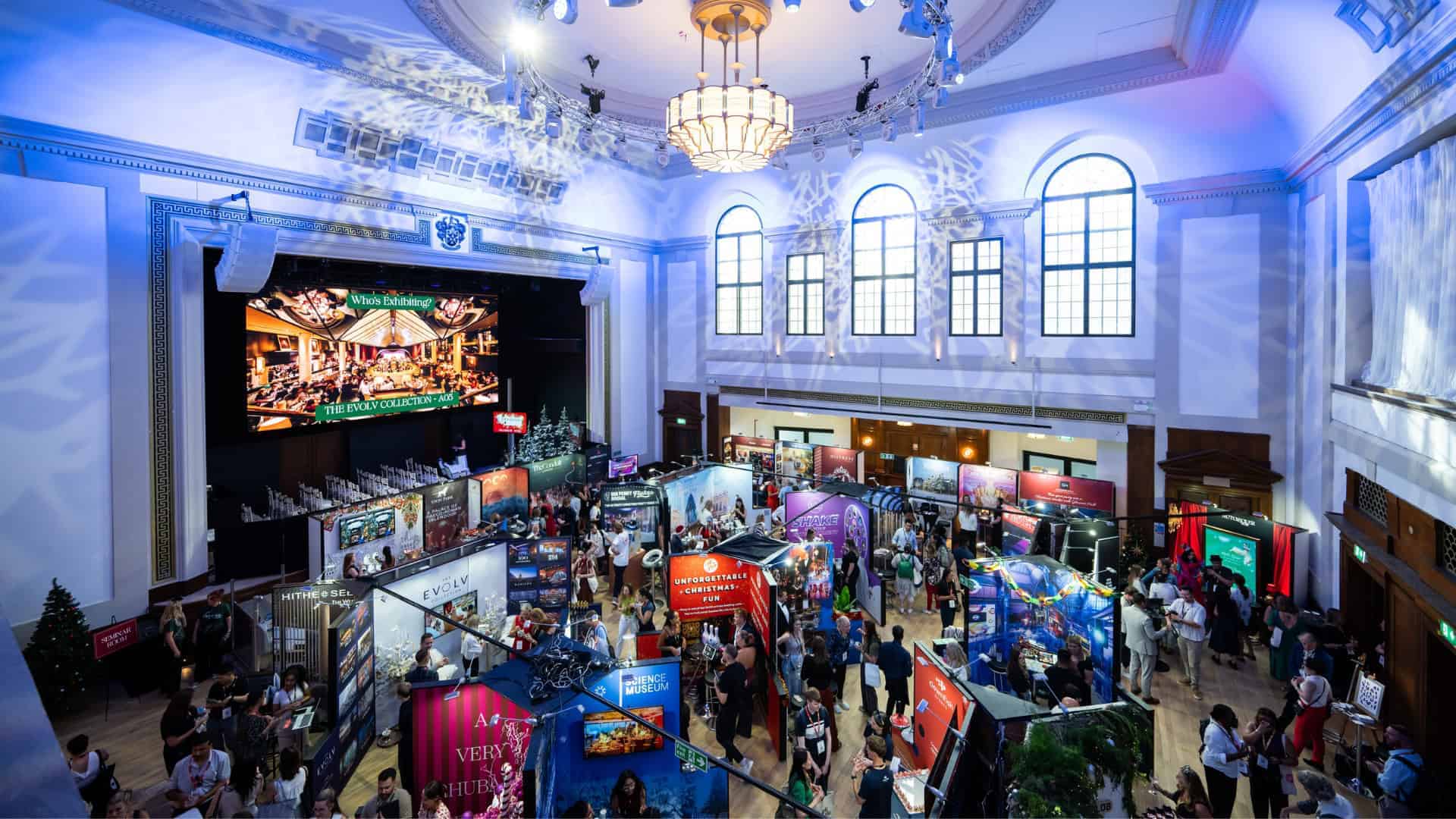
Town Hall Spaces operates as a corporate event venue in King’s Cross on a dry hire basis. The main hall and breakout spaces support the full range of away day formats, from large all-hands presentations to structured working group sessions, within a single venue hire.
Build the agenda around energy, not just content
The biggest structural mistake in away day agendas is front-loading all the heavy content in the morning and leaving the afternoon to drift. People’s attention and energy follow a predictable arc across a long day, and an agenda that ignores this tends to produce diminishing returns after lunch.
A structure that tends to work well:
- Morning: full-group session with clear stakes. This is when focus is highest. Use it for the conversation that most needs everyone’s attention.
- Mid-morning break: timed and enforced. Fifteen minutes, not thirty. Shorter breaks preserve momentum.
- Late morning: breakout working groups. Smaller configurations with a specific output to bring back.
- Lunch: unstructured. Let people move around and talk informally. The conversations that happen here are often as valuable as the structured sessions.
- Early afternoon: showcase or share-back from the morning groups. Lower cognitive load, higher engagement if people are presenting their own work.
- Late afternoon: decisions and close. Capture what was agreed, who owns what, and what happens next. Keep this tight.
If you are adding a social element (drinks, dinner, a shared experience), attach it to the close of the working day rather than separating it by a long gap. The transition from work to social is easier when the two are continuous.
Sort the logistics that people notice
Most away day logistics are invisible when they work and conspicuous when they do not. The ones worth paying attention to:
- Joining information. Send clear directions to the venue, including which entrance to use and where to go on arrival. Venues near busy transport hubs often have multiple access points.
- Catering timing. Confirm breakfast or morning refreshments arrive before the first session starts, not during it. Build catering handovers into the run of show.
- AV check. Run a technical check at least an hour before the first session. Laptop connections, screen resolution and audio levels should all be confirmed with the venue or AV technician before anyone else arrives.
- Breakout setup. If the venue is reconfiguring between sessions, agree the changeover timing in advance and build it into the agenda as a visible slot, not a hidden assumption.
- Point of contact. One person on the organising side should own the day’s logistics and be the single point of contact for the venue. Splitting this across multiple people creates gaps.
Brief your team before the day
An away day works better when people arrive knowing what to expect. This does not mean circulating a minute-by-minute agenda, but it does mean communicating a few things in advance:
- The purpose of the day in one or two sentences
- The rough structure: what the morning and afternoon will each focus on
- Any preparation they need to do beforehand, such as reviewing a document or preparing a short presentation
- Practical information: start time, location, dress code if relevant, what to bring
A short note sent two or three days before is usually enough. The aim is to make sure people arrive ready to engage rather than spending the first hour working out what the day is for.
A well-planned away day does not need a large budget or an elaborate programme. It needs a clear objective, a format that serves it, a venue that supports it, and an agenda that respects how people actually work across a long day.
London offers a wide range of options for corporate away days, from hotel function rooms to purpose-built event spaces. The right choice depends less on size or location than on how well the venue fits the format you have in mind.
If you are looking for ideas on format, our team away day ideas guide covers the main options in more detail. For guidance on what to budget for your venue hire, our event venue hire cost guide covers realistic price ranges and what is typically included. For venue enquiries, the team at Town Hall Spaces is happy to talk through what would work for your numbers and agenda.
This article is part of Town Hall’s series on planning corporate events in London. Related reading: corporate event hire at Town Hall Spaces.